
- #1 law firm in wheaton
Ready To Solve Your Problem
When you are faced with a difficult legal matter, you need an attorney who will put you first, no matter how complex your case may be.


DuPage County Drug Charge Lawyer
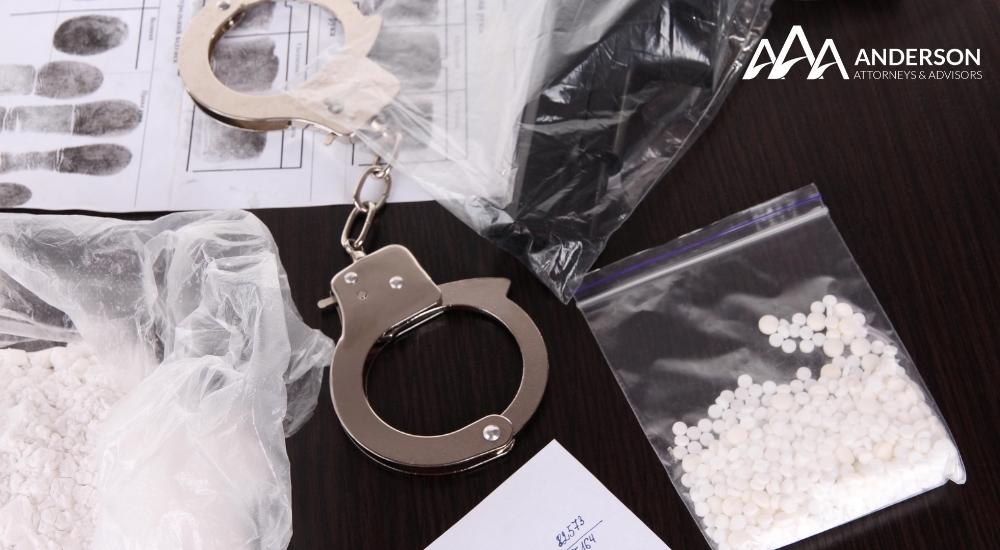
Wheaton Drug Crime Defense Lawyers Serving All of DuPage County & Beyond
In Illinois, drug-related charges carry harsh penalties that can affect your freedom, finances, and future opportunities. If you or someone you love faces allegations, working with a DuPage County drug charge lawyer as early as possible can make a meaningful difference in how your case plays out.
At Anderson Attorneys & Advisors, we treat every drug arrest as a serious matter that demands immediate attention. Attorney Audriana Anderson brings more than 20 years of experience as a former Assistant State’s Attorney in DuPage County, where she handled hundreds of drug cases. That background provides valuable insight into how prosecutors build cases and where weaknesses may exist.
To discuss your situation and next steps, call 630-780-3960 or contact us online to schedule a free consultation with an experienced criminal defense lawyer in DuPage County, IL today.
Facing Drug Crime Charges in DuPage County, Illinois?
Illinois law classifies drug offenses based on the type of substance, the amount, and the alleged conduct. Charges may involve possession, manufacturing, delivery, or intent to deliver controlled substances. Even small quantities can trigger criminal charges, and factors such as location, prior history, or alleged intent can increase exposure.
The distinction between misdemeanor and felony drug charges matters. Lower-level possession cases may qualify as misdemeanors, while larger quantities, certain substances, or allegations involving distribution can result in a felony. Felony charges in DuPage County carry heavier penalties, including prison time, higher fines, and lasting consequences tied to a criminal record.
Local prosecutors pursue drug cases aggressively. Early legal guidance helps address these issues, challenge the evidence, and pursue outcomes that limit long-term harm.

Controlled Substances and Drug Schedules in Illinois
Illinois drug laws classify illegal substances into schedules based on their accepted medical use and potential for abuse. Prescribed under the Illinois Controlled Substances Act (720 ILCS 570), these schedules help determine how prosecutors charge cases and what penalties apply. Substances listed in higher schedules typically carry stricter enforcement and increased sentencing exposure.
Schedule I substances include drugs with no recognized medical use under Illinois law and a high risk of abuse (i.e., Heroin, PCP, LSD, ecstasy). Other schedules cover prescription medications and controlled substances with some accepted medical uses but varying levels of restriction, ranging from cocaine to meth to marijuana and beyond.
As a substance moves higher in the schedule classification, the risk of more serious charges increases, especially when cases involve possession beyond personal use, distribution allegations, or prior convictions.
Drug-Related Criminal Charges We Defend Against
Drug charges can arise in many forms, each carrying different penalties and long-term consequences under Illinois law. Anderson Attorneys & Advisors defends clients against a wide range of drug-related allegations, from simple possession to more serious charges involving distribution or manufacturing.
Drug Possession Charges in DuPage County, IL
Drug possession charges in Illinois are governed by 720 ILCS 570/402, and penalties depend on the type and amount of the substance involved. Some possession offenses qualify as misdemeanors, carrying up to 364 days in jail and fines of up to $2,500, while larger quantities or higher-scheduled substances can result in felony charges with lengthy prison sentences and increasingly expensive fines. A conviction may also lead to probation, mandatory treatment, and a permanent criminal record.
Our DuPage County drug possession lawyers at Anderson Attorneys & Advisors defend clients by reviewing the legality of traffic stops, searches, and seizures, and by challenging whether the prosecution can meet its burden of proof. We work hard to reduce charges, seek dismissal, or pursue outcomes that limit consequences while protecting clients’ rights.
Possession With Intent to Deliver in DuPage County, IL
Possession with intent to deliver charges in Illinois involve allegations that a person had controlled substances and planned to distribute them rather than keep them for personal use. Prosecutors do not need to prove that a sale occurred. Instead, they rely on surrounding facts to argue intent, such as the amount of drugs involved, how they were packaged, the presence of cash, or items linked to distribution.
These cases are charged as felonies in Illinois, with penalties that increase based on the type and quantity of the substance. Because intent plays a central role, defending these charges often focuses on challenging assumptions about purpose, questioning how evidence was obtained, and exposing gaps in the state’s theory of distribution.
Drug Trafficking and Delivery Charges in DuPage County, IL
Drug trafficking and delivery charges in Illinois involve allegations of manufacturing, delivering, or possessing controlled substances. These offenses fall under the Illinois Controlled Substances Act, 720 ILCS 570/401, which classifies them as felony offenses. Charging decisions depend on the type of substance, the amount involved, and evidence suggesting distribution, such as packaging materials, large sums of cash, or communications tied to alleged sales. Convictions can lead to lengthy prison sentences, substantial fines, mandatory parole, and a permanent felony record.
Because these cases carry severe and life-changing consequences, defendants facing trafficking or delivery charges need experienced and aggressive legal representation as early as possible. Prosecutors pursue these cases with significant resources and seek harsh penalties upon conviction. Skilled defense counsel can challenge the evidence, expose procedural violations, and pursue strategies that reduce charges or limit long term damage to a defendant’s future.
Prescription Drug Offenses in DuPage County, IL
Prescription drug offenses involve allegations that an individual possessed, obtained, or distributed medication without a valid prescription or outside the scope of lawful use. These cases commonly arise from sharing prescription pills, possessing medication prescribed to someone else, or allegations tied to forged or improperly obtained prescriptions. Charges can range from misdemeanors to felony offenses, depending on the substance involved and the surrounding facts.
Prosecutors often rely on pharmacy records, prescription monitoring databases, and statements made during an investigation. A strong defense focuses on the legality of the search, the accuracy of prescription records, and whether the state can prove knowing and unlawful possession or distribution.
Drug Paraphernalia Charges in DuPage County, IL
Drug paraphernalia charges involve allegations of possessing items used to consume, prepare, store, or conceal illegal drugs. As per 720 ILCS 600/3.5, a person can face criminal charges if they knowingly possess an item considered drug paraphernalia and intend to use it to take drugs into their body or to prepare drugs for use. This includes items used to inhale, inject, or otherwise consume a controlled substance. Common examples include pipes, syringes, rolling papers, scales, and other items that law enforcement claims are connected to drug use or distribution.
A conviction for this offense is classified as a Class A misdemeanor and carries a minimum fine of $750, along with any other penalties allowed for that offense. What’s more, prosecutors often pair these charges with drug possession allegations, even when no illegal substances are found.
Because drug paraphernalia charges can still result in fines, probation, and a permanent criminal record, having a strong defense matters. Legal representation can challenge whether the item qualifies as paraphernalia, whether intent can be proven, and whether law enforcement followed the law when searching or seizing evidence.
Penalties for Illinois Drug Convictions
As mentioned, the penalties for drug convictions in Illinois vary significantly based on the circumstances surrounding the arrest, including the type and amount of drugs involved. Offenses can range from Class C misdemeanors, the least serious level, to Class X felonies, the most serious classification, which carry mandatory prison sentences (up to 50 years) and severe long-term consequences.
Penalties increase significantly for repeat offenses, distribution allegations, and other aggravating factors, but may include:
- Jail time and/or prison sentences ranging from months to decades, depending on the charge
- Steep fines, with some offenses carrying a maximum fine of tens or hundreds of thousands of dollars
- Probation or court supervision, often with strict conditions and compliance requirements
- Driver’s license suspension or revocation in drug-related cases involving traffic violations
- Mandatory drug treatment, counseling, or education programs
- Permanent criminal record that affects employment, housing, and professional opportunities
- Increased sentencing risk when allegations involve distribution across state lines
Because Illinois courts impose severe penalties based on both the offense and surrounding facts, early legal guidance plays a critical role in limiting exposure and protecting long-term interests.
DuPage County Drug Court and Alternative Sentencing Options
The DuPage County Drug Court Program emphasizes treatment and accountability instead of incarceration for eligible defendants. Participants remain under close court supervision, with requirements such as regular check-ins, drug testing, and counseling aimed at addressing underlying substance use issues. When completed successfully, the program may result in reduced charges, limited jail time, or case dismissal, depending on the circumstances. Eligibility depends on the nature of the charge, prior history, and a participant’s ability to meet program requirements.
Juvenile Drug Crime Penalties in Illinois
Juvenile drug crime charges can place a young person’s educational opportunities and future plans at risk. When a minor is accused of a drug-related offense, the consequences may extend beyond juvenile court to include school discipline, extracurricular restrictions, and long-term record concerns. Even cases involving small amounts of substances can trigger serious legal and academic repercussions if not handled carefully.
A DuPage County juvenile crime lawyer plays a key role in protecting a child’s rights while working to limit lasting harm. This includes addressing how the allegation arose, whether law enforcement followed proper procedures, and what options exist to keep a juvenile record from interfering with education and future goals.

Why You Need a DuPage County Drug Crimes Lawyer On Your Side As Early As Possible
Drug crime cases in DuPage County can unfold over several years, especially when charges stem from an extended investigation or involve multiple alleged offenses. From the moment law enforcement begins building a case, prosecutors work to establish probable cause and gather evidence long before formal charges are filed. What happens early on can shape the entire outcome.
When someone is accused of a drug offense, the assumption of innocence remains until proven guilty, but delays in securing legal counsel can put that protection at risk. A skilled criminal defense attorney can intervene early to review the investigation, challenge how evidence was obtained, and protect constitutional rights before mistakes compound.
Defenses to DuPage County Drug Charges
Defenses in drug cases often focus on whether law enforcement followed the law and whether the prosecution can meet its burden of proof. Some of the most frequently used defenses include:
- Lack of probable cause. Police must have a lawful reason to stop, search, or detain an individual. If probable cause was missing, the case may be weakened or dismissed.
- Illegal search or seizure. Evidence obtained through an unlawful search, traffic stop, or warrant violation may be suppressed and excluded from court.
- Insufficient evidence. Prosecutors must present sufficient evidence to prove every element of the charge beyond a reasonable doubt.
- Unlawful traffic stop. If officers lacked a valid basis for the stop, any evidence discovered afterward may be challenged.
- Lack of possession or control. The prosecution must prove the defendant knowingly possessed or controlled the alleged substance.
- Chain of custody issues. Breaks or errors in handling evidence can raise questions about reliability and admissibility.
Each defense depends on the facts of the case, which is why early legal review plays a critical role in identifying weaknesses in the prosecution’s claims.

Why Choose Anderson Attorneys & Advisors As Your DuPage County Drug Charges Lawyers?
Anderson Attorneys & Advisors brings a strong command of criminal law and a practical approach informed by the perspective of former prosecutor Audriana T. Anderson. That background provides an in-depth understanding of how drug cases are charged, investigated, and argued in DuPage County courts. She and her team can evaluate the facts early, explain the potential consequences clearly, and identify every legal avenue available to protect your rights and future.
The firm also addresses issues that extend beyond the charges themselves. Drug cases frequently involve claims tied to property seizures, which may reveal unlawful search practices and asset forfeiture actions on behalf of the government. Our asset forfeiture lawyers challenge improper seizures and work to recover property taken during an investigation. By reviewing search procedures, questioning probable cause, and testing whether the state followed the law, our team at Anderson Attorneys & Advisors develops legal options that place clients in the strongest possible position when facing serious drug allegations.
Aggressive Drug Crime Defense in Wheaton, DuPage County, and Throughout Northern Illinois
Anderson Attorneys & Advisors provides aggressive drug crime defense for clients charged in Wheaton, Naperville, Downers Grove, Elmhurst, Lombard, and throughout DuPage County. The firm also represents individuals in Kane County, Will County, Cook County, and the surrounding Northern Illinois region, offering consistent legal support regardless of where an arrest occurs.
We also represent clients who are out-of-county visitors arrested in DuPage County. Whether you live locally or were passing through, our attorneys can manage court appearances, address warrants or bond issues, and pursue outcomes that limit disruption to your life while defending against serious drug allegations.

Speak With an Experienced DuPage County Drug Crimes Defense Lawyer Today
Facing drug charges can feel overwhelming, especially when the stakes include your freedom and future. Not to mention, drug cases move quickly, and the prosecution’s case often begins taking shape long before a court date is set. For individuals charged with a drug offense in the area, working with a DuPage County criminal defense attorney as early as possible can make a meaningful difference.
At Anderson Attorneys & Advisors, our law firm has extensive experience handling drug crimes in DuPage County, Kane County, and the surrounding Northern IL region. We are intimately familiar with local court procedures and how prosecutors approach these cases and are committed to achieving the most favorable outcome on your behalf.
To discuss your options and protect your rights, call 630-780-3960 or send a message online to schedule a free consultation with a local criminal defense attorney right away.